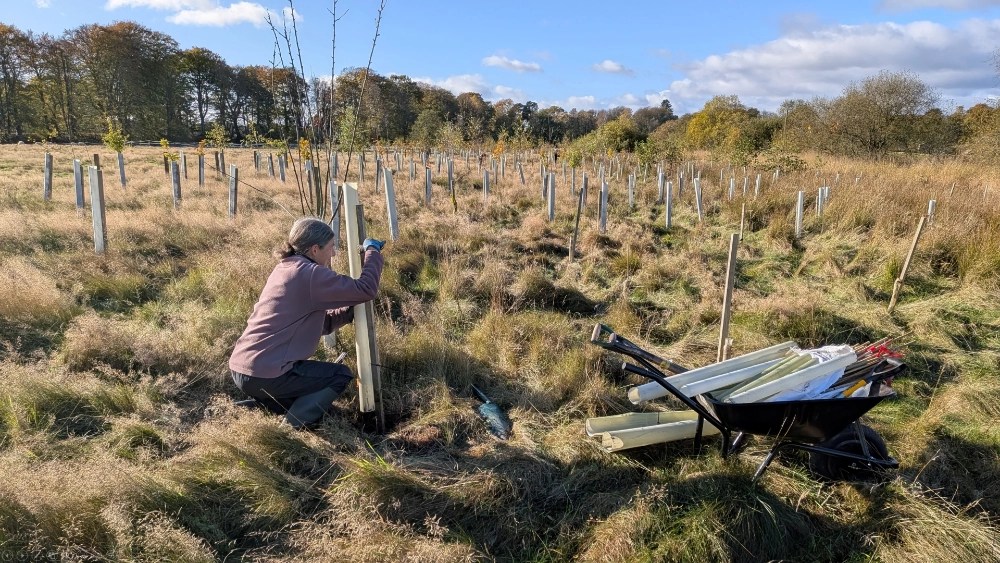
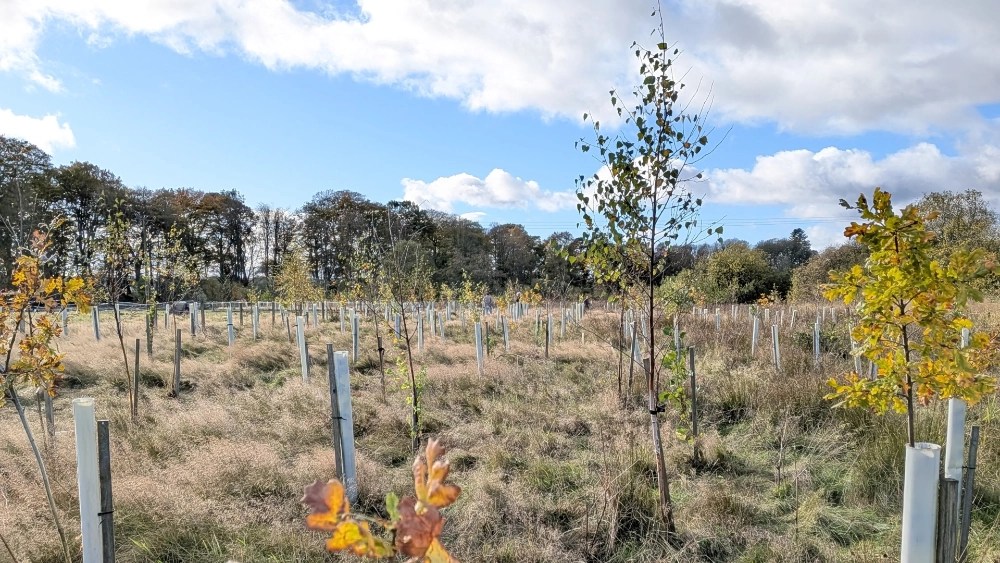
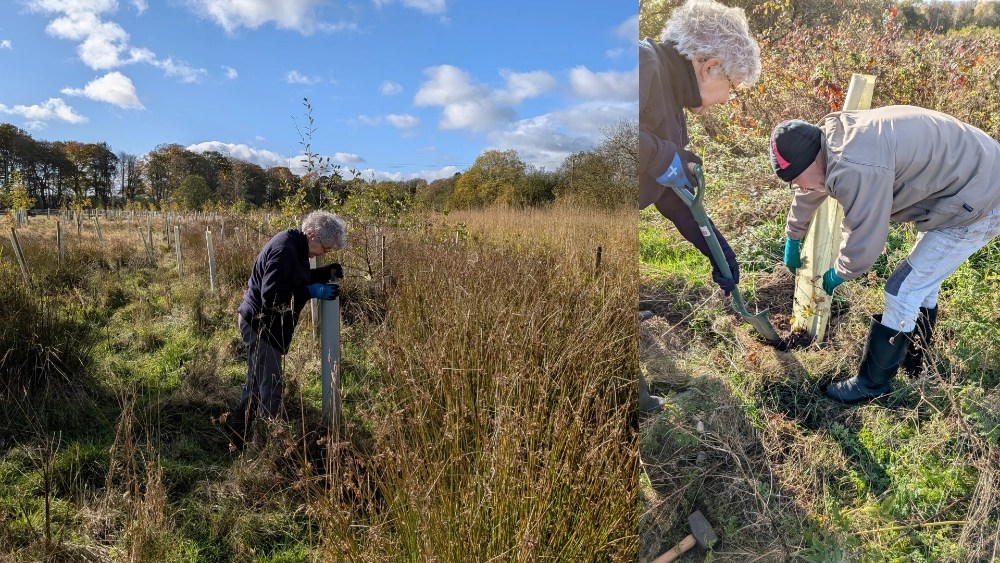
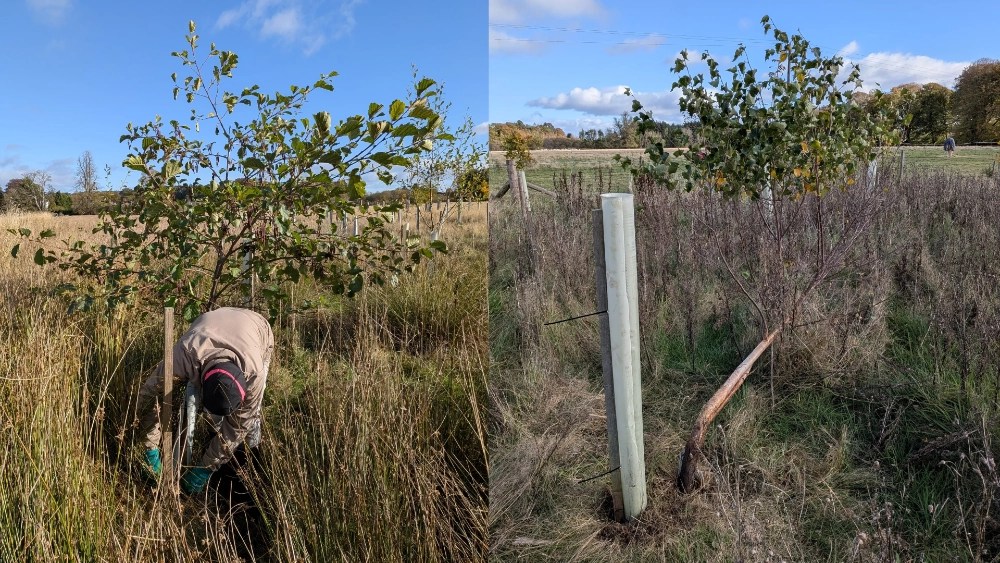
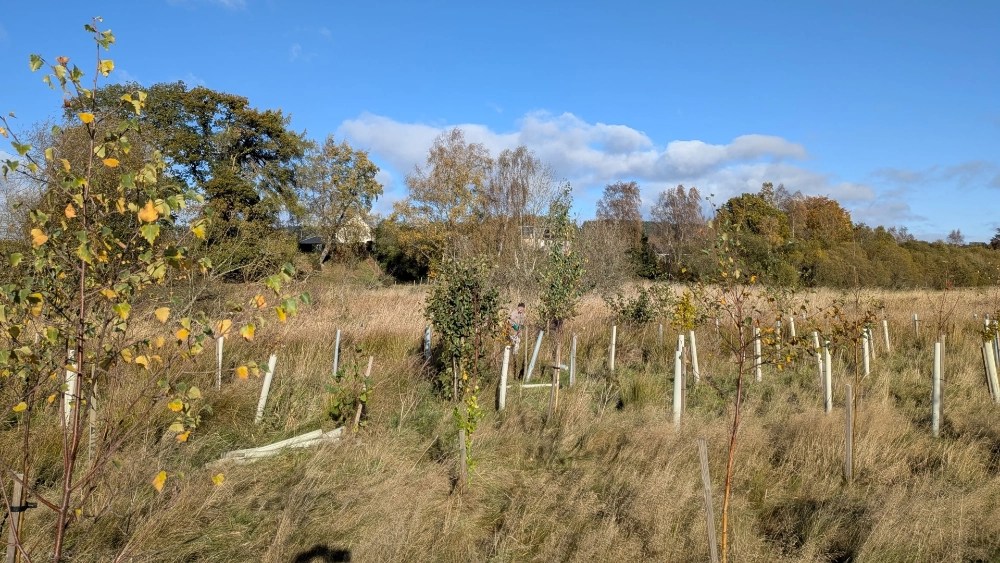
Our volunteers checked many of the young trees and their protective tubes and planted several new specimens — four oaks and five wild cherries (Gean). The recently established junipers are thriving.
The site, being quite exposed to the wind, shows a number of young trees leaning or becoming recumbent. Many of these are regenerating naturally from their bases and will, in time, produce new leaders along their length.
Species such as willow and alder are well known for this habit of falling over and layering — creating new roots where their trunks touch the ground. Birch can also do this on occasion. In becoming recumbent, trees gain greater stability for many decades and reduce their wind resistance in the shorter term. This process represents a form of vegetative spread most characteristic of willows, where a repeating pattern of collapse, rooting, and renewed growth can extend over several dozen square metres. Boggy ground adds to the likelihood of repeated failures (basal failure/rolling once recumbent).
In a wilding ecosystem, this creates valuable habitat, provides shelter from prevailing winds for other plants, and can even extend the lifespan of the trees themselves. Although far less desirable in urban settings, this process plays an important ecological role in natural woodland regeneration.
More can be read about this phenomenon in the paper on Phoenix Trees by Richard Worrell.
Over the coming years, we’ll use the shelter created by these Phoenix trees as planting sites for additional young trees which will grow up thorough them, helping to diversify both the structural composition and age profile of the woodland.
As always, we’re learning as we go — and enjoying every step of the journey.
Our thanks to all the volunteers who took part.
 Tayside Woodland Partnerships
You must be logged in to post a comment.